
AI Is Moving From Hype to Real Work — And Here’s What That Actually Looks Like
A few years ago, AI felt like a buzzword that lived mostly in headlines, pitch decks, and futuristic movies. Fast forward to now, and it’s quietly becoming the nervous system of business. Companies aren’t just trying AI anymore — they’re building workflows, decision systems, and customer experiences around it. But let’s slow down and make this simple.
Editor | Forever Pink Digital
11/8/20252 min read
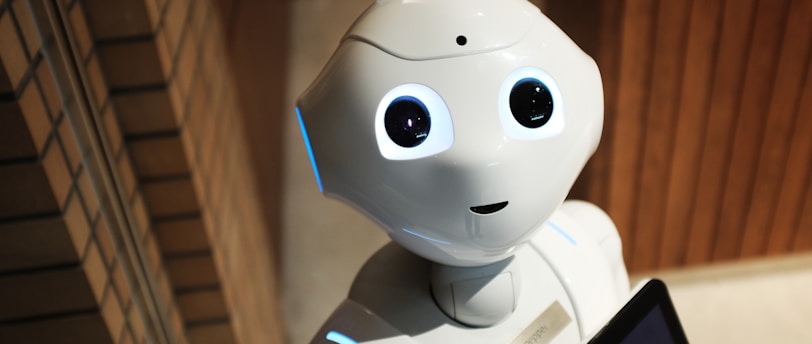

AI: Moving From Hype to Real Work
A few years ago, AI felt like a buzzword that lived mostly in headlines, pitch decks, and futuristic movies. Fast forward to now, and it’s quietly becoming the nervous system of business. Companies aren’t just trying AI anymore — they’re building workflows, decision systems, and customer experiences around it.
But let’s slow down and make this simple.
The Early Stage: AI as Small Experiments
Think of how companies first used AI like how people test-drive a new kitchen appliance: One model helped answer customer service chats.
Another predicted when a machine in a factory might break down.
Another recommended products on an app. Useful? Yes. Transformational? Not really. These were pilot projects — like having one smart assistant in the kitchen, but the rest of your house is still manual.
Where We’re Headed: AI That Runs End-to-End Workflows
Now companies are moving toward AI that handles parts of the entire workflow, not just one step. Example: Customer Support
Before AI:
A customer messages a complaint, the agent reads it, finds the order, checks policy, and responds.
With AI now:
The AI reads the message, identifies the issue, pulls the order information, drafts a solution, and then asks a human to approve it.
Humans oversee while AI does most of the heavy lifting.
This is called agentic AI — AI that plans, acts, and executes rather than simply answering prompts. Not Just Making Content — Making Decisions
A big shift is happening.
Old Generative AI:
“Write me a marketing caption.”
New AI Systems:
“Plan this campaign, draft the caption, schedule posts, monitor performance, and adjust messaging based on engagement.”
Think of it less as a chatbot and more as an intern that can work all night and never forgets instructions. Real-Life Example: Retail
Large retail chains use AI to forecast inventory. If weather gets hotter earlier in the year, AI notices that customers are buying more cold drinks. So it suggests restocking faster at stores where demand is high. Instead of reacting weeks later, stores act when needed.
Outcome: Less waste, more sales.
What’s Still Hard
Even though businesses want AI everywhere, a few issues slow them down:
Data is scattered in old systems.
Teams aren’t trained to work alongside AI.
Companies aren’t sure how to measure AI’s ROI.
Ethical and accuracy risks still require human oversight.
But companies that solve these challenges move faster and more efficiently.
So What Should Businesses Do?
Whether a startup or a large enterprise:
Start with one workflow that affects revenue, such as support or sales.
Track business outcomes, not how many models you use.
Train teams — AI needs people who know how to apply it wisely.
Design systems where AI assists and humans make final decisions.
The Big Picture
AI is no longer about being cool. It’s about making work better — faster service, fewer errors, smarter decisions. The companies succeeding aren’t necessarily the biggest. They’re the ones willing to rethink how work gets done.
Connect With Us
Email: info@foreverpinkdigital.com
Whats App (+91) 8384067836
© 2025. Forever Pink Digital Solutions (R). All rights reserved.
We are a boutique creative and advertising agency built on the belief that every brand deserves to be remembered for what it stands for.
By blending strategy, storytelling, design, and digital intelligence, we create work that feels as meaningful as it is measurable. we turn raw ideas into narratives that inspire, influence, and endure.
Every pixel, every word, every campaign — crafted to move people.
We tell your story like it matters. Because it does.
About Forever Pink Digital Solutions
Microsoft Teams Id:
live:.cid.525c34df9d3ce230
📍 Based in India | Working with brands globally